
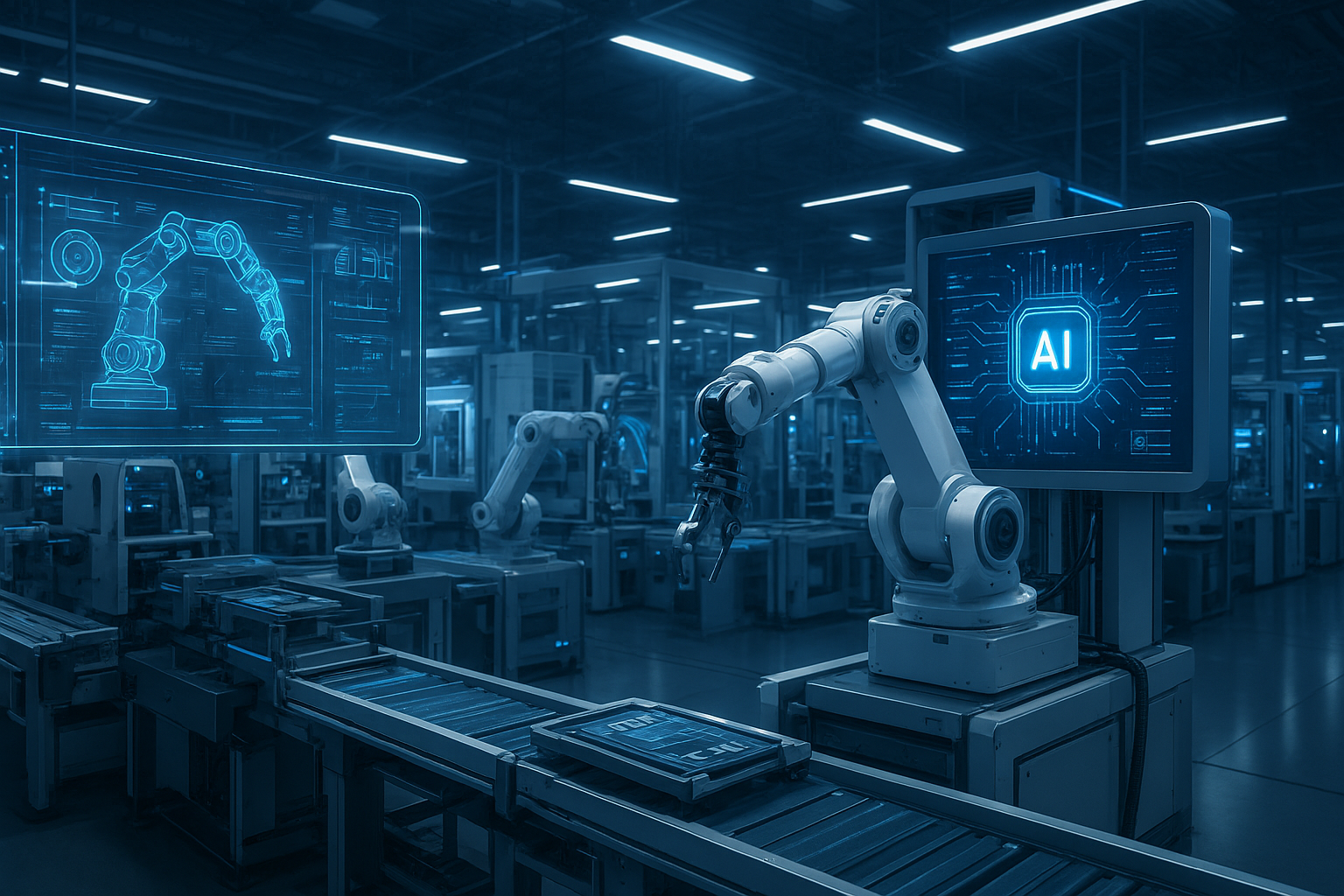
The transition to Enterprise AI 2.0 marks a pivotal moment for the manufacturing sector, offering unprecedented opportunities to enhance productivity and efficiency. However, many manufacturers are still navigating the early phases of AI adoption.
### Understanding Enterprise AI 2.0
Enterprise AI 2.0 represents the next evolution in artificial intelligence technology, distinguished from AI 1.0 by its advanced capabilities to drive efficiency and profitability. While AI 1.0 focused on basic automation, AI 2.0 incorporates sophisticated algorithms for predictive analytics, process automation, and decision-making.
### Role of AI 2.0 in Manufacturing
**Digital Twins**: AI-powered digital twins create real-time, virtual replicas of physical operations, allowing manufacturers to optimize processes, reduce downtime, and enhance productivity. By integrating multiple data points into a unified view, digital twins are transforming production line efficiency ([source](https://www.technologyreview.com/2025/11/19/1128067/scaling-innovation-in-manufacturing-with-ai)).
### Current State of AI Adoption
Despite the potential benefits, only 35% of manufacturers surveyed have begun deploying AI use cases in production ([source](https://www.technologyreview.com/2024/04/09/1090880/taking-ai-to-the-next-level-in-manufacturing)). The COVID-19 pandemic has accelerated the need for digital transformation, positioning Enterprise AI 2.0 as essential for maintaining competitiveness and operational continuity ([source](https://techcrunch.com/2021/08/04/enterprise-ai-2-0-the-acceleration-of-b2b-innovation-has-begun)).
### Challenges and Considerations
Research by Joseph Davis highlights a paradox: despite rapid advancements in automation and digital technologies, productivity growth has stalled. This suggests that automation might not always be implemented in the most effective areas ([source](https://www.technologyreview.com/2026/01/21/1131366/rethinking-ais-future-in-an-augmented-workplace)). Manufacturers need to strategically choose where and how to integrate AI effectively.
### Case Studies and Examples
While specific real-world examples or case studies are not provided, manufacturers can hypothetically imagine a scenario where AI 2.0 applications, such as predictive maintenance, result in significant reductions in operational costs and improved uptime.
### Conclusion
The shift to Enterprise AI 2.0 in manufacturing is not only an opportunity but a necessity for modern industry leaders who aim to remain competitive. By addressing integration challenges and focusing on strategic adoption, manufacturers stand to gain significantly from AI-enhanced efficiency and productivity.
Summary:
Embracing Enterprise AI 2.0 is crucial for manufacturers looking to boost productivity and maintain competitiveness. While challenges remain in adoption, especially in choosing effective implementation areas, the potential for enhanced efficiency is substantial. Manufacturers should consider strategic integration to maximize these benefits.