
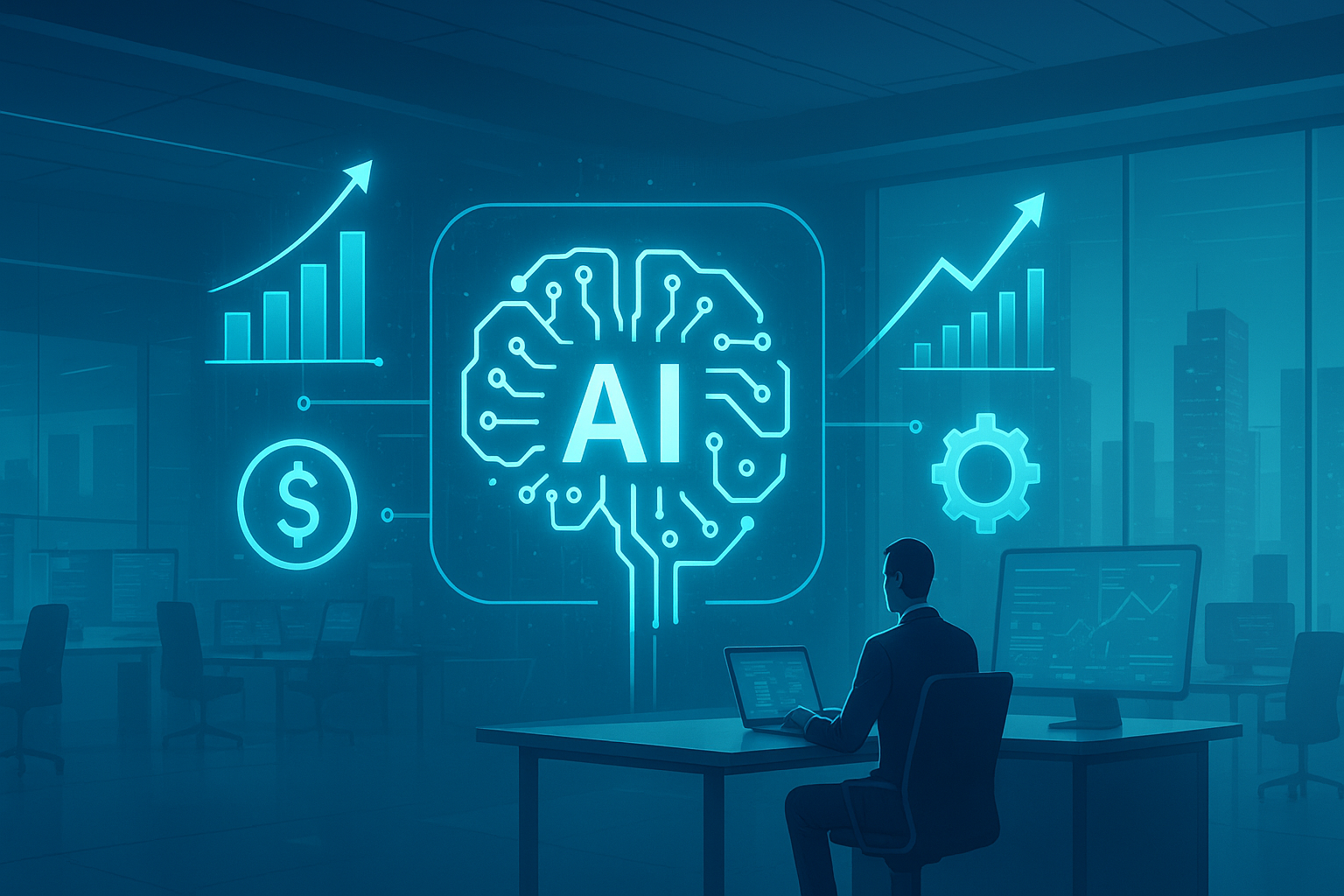
Artificial Intelligence is revolutionizing business operations around the globe, offering the potential for remarkable economic gains. Yet, the approach to AI integration significantly determines success or failure. For businesses aiming to harness AI efficiently, understanding both its financial benefits and operational challenges is essential.
### AI’s Economic Impact on Global Business
The integration of generative AI into business can potentially inject $2.6 trillion to $4.4 trillion annually into the global economy. The banking sector alone stands to gain an additional $200 billion to $340 billion through full implementation of AI use cases. These figures underscore the transformative power AI holds for economic value.
### The Cost of Unstructured AI Integration
Despite the promising potential, **95% of AI projects fail to make a profit-and-loss impact** when businesses lack a structured approach. This failure is not due to technological limitations but the absence of operational excellence. Only 34% of companies have dedicated AI teams, impairing their capability to effectively scale AI models into production workflows.
### Success Stories in AI Integration
Small businesses like tutoring services have successfully adopted AI to manage administrative tasks, significantly improving time management and operational efficiency. Larger enterprises benefit from AI through platforms like iPaaS, which streamline integration processes. For instance, a UK-based retailer reduced its integration costs by 40% by modernizing its infrastructure with iPaaS.
### The Role of Structured AI Teams
The lack of dedicated AI teams and integration between data and systems is a major barrier to successful AI adoption. Businesses need structured AI teams to maintain workflows and drive AI deployment across operations effectively. This structured approach not only mitigates high failure rates but also enhances the potential return on AI investments.
### Strategic Steps for AI Success
To ensure successful AI adoption, business leaders must prioritize establishing structured operations and investing in teams that sustain AI workflows. This strategic alignment will enable businesses to capitalize on AI’s full potential while minimizing associated challenges.
Summary:
AI offers immense economic benefits but requires structured integration to avoid high failure rates. Business leaders need to prioritize operational excellence and dedicated AI teams to fully harness these opportunities.